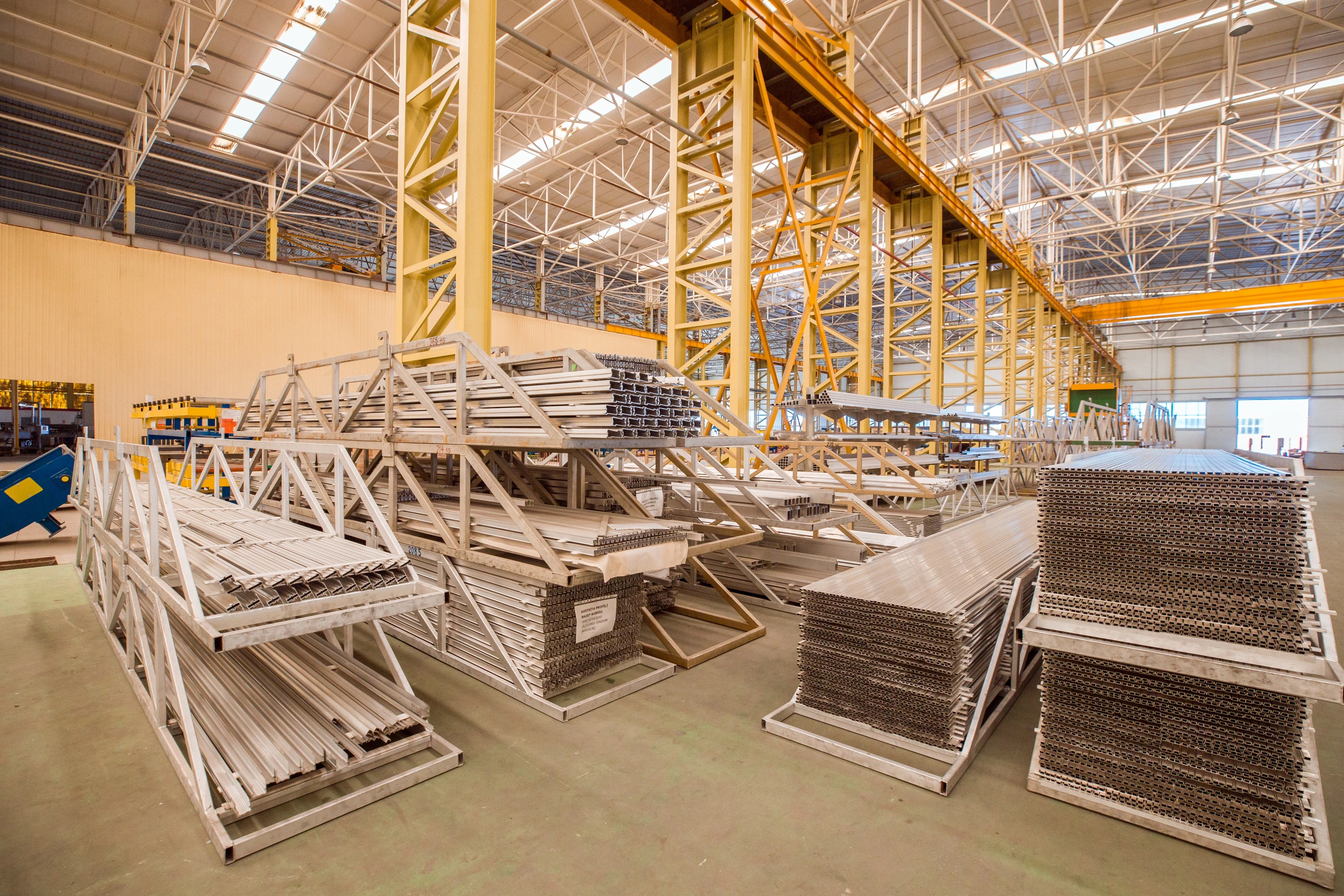
Urban visibility is not only visual recognition.
It is measurable environmental performance expressed through material intelligence.
In high-density cities---especially coastal, high-humidity, high-noise environments like Mumbai---material selection directly impacts:
- Daylight penetration
- Solar heat gain
- Natural ventilation
- Acoustic comfort
- Maintenance cycles
- Lifecycle cost
- Rental and capital pricing
Let us quantify this.
1. Light Performance: Daylight Factor & Energy Load
Case Comparison: Two Commercial Buildings
| Parameter | Option A: Single Glazed Curtain Wall | Option B: Double Glazed Low-E with External Fins |
|---|---|---|
| Visible Light Transmittance (VLT) | 80% | 50--60% |
| Solar Heat Gain Coefficient (SHGC) | 0.70 | 0.28--0.35 |
| U-Value | 5.8 W/m²K | 1.8--2.5 W/m²K |
Impact on Cooling Load
Cooling load approximation:
Q = Area × SHGC × Solar Radiation
Assume:
- Façade area = 2,000 m²
- Solar radiation (Mumbai west façade peak) ≈ 600 W/m²
Option A:
Q = 2000 × 0.70 × 600
= 840,000 W = 840 kW
Option B:
Q = 2000 × 0.30 × 600
= 360,000 W = 360 kW
Cooling Load Reduction:
480 kW reduction
If HVAC runs 8 hours/day:
480 × 8 = 3,840 kWh/day
At ₹10/kWh:
₹38,400/day
≈ ₹1.15 crore per year
Material upgrade premium may cost ₹2--3 crore.
Payback period: ~2--3 years.
Now translate this into pricing.
Lower operational cost:
- Improves green rating
- Attracts ESG-sensitive tenants
- Enables ₹5--10/sqft rental premium
On a 200,000 sqft building:
₹10 × 200,000 = ₹20 lakh/month premium
= ₹2.4 crore/year additional revenue
Material selection becomes pricing leverage.
2. Daylight Factor & Productivity
Target daylight factor (DF) in offices: 2--5%
Improper glazing + glare = blinds down = artificial lighting 100%
Lighting load:
10--15 W/sqm
For 20,000 sqm:
~200--300 kW lighting demand
Optimized façade can reduce artificial lighting by 40--60%.
Energy reduction:
120 kW × 8 hours = 960 kWh/day
≈ ₹28 lakh annually
Studies (Heschong Mahone Group) link daylight access to:
- 5--15% productivity increase
- Higher lease retention
Visibility through daylight is measurable economic performance.
3. Air & Ventilation: ACH Calculations
Natural ventilation performance measured in Air Changes per Hour (ACH).
Comfortable naturally ventilated building:
6--12 ACH
Assume:
Office volume = 60,000 m³
Required airflow for 6 ACH:
60,000 × 6 = 360,000 m³/hour
If façade has:
- 20% operable area
- Proper cross ventilation
- 3 m/s coastal breeze
Airflow Q ≈ A × V
If openable area = 400 m²
Q = 400 × 3 = 1,200 m³/s
= 4,320,000 m³/hour
Even at 25% efficiency → 1,080,000 m³/hour
Achieves > 6 ACH comfortably.
Result:
- Reduced HVAC runtime
- Lower indoor CO₂ levels
- Higher occupant comfort
Material choice (operable aluminum systems vs fixed glazing) directly determines this.
Fully sealed façades = permanent HVAC dependency.
4. Acoustic Performance: STC Ratings & Pricing
Transit corridor project example:
External noise level: 75 dB
Target internal office level: 45 dB
Required reduction: 30 dB minimum
| Material | STC Rating |
|---|---|
| 6mm Single Glass | 27 |
| 6+12+6 DGU | 32--35 |
| Laminated Acoustic DGU | 40--45 |
Single glazing fails.
Acoustic DGU may cost ₹800--1,200/sqft extra.
However:
Tenant churn due to noise = vacancy cost.
Assume:
10,000 sqft vacant for 3 months
Rent ₹120/sqft
Loss:
10,000 × 120 × 3 = ₹36 lakh
Acoustic upgrade cost for façade:
~₹1.5--2 crore
But protects rental continuity across lifecycle.
Noise mitigation = revenue protection.
5. Material Aging & Lifecycle Cost (LCC)
Let us compare façade finishes.
Option A: External Paint Finish
- Initial cost: ₹150/sqft
- Repainting cycle: 5 years
- Maintenance cost: ₹120/sqft every cycle
Over 25 years:
5 repaint cycles
Total cost:
₹150 + (₹120 × 5) = ₹750/sqft
Option B: Stone Cladding
- Initial cost: ₹650/sqft
- Minimal maintenance
Over 25 years:
₹650/sqft
Long-term cheaper.
Higher visual stability.
Stronger market perception.
Buildings that age poorly suffer:
- Discounted resale
- Brand erosion
- Higher CAM charges
Material longevity preserves urban visibility.
6. Heat Island & Surface Reflectance Index (SRI)
Roof SRI values:
| Material | SRI |
|---|---|
| Dark Bitumen | 0--10 |
| Light Coated Roof | 70--90 |
Lower roof temperature difference:
10--20°C reduction
Cooling energy drop:
5--10%
For large commercial complexes:
This translates to several lakhs annually.
SRI becomes ESG marketing + operational benefit.
7. Correlation Between Material & Pricing Strategy
Material performance influences:
- Green certification (IGBC/LEED)
- Operating cost
- Rental premium
- Brand positioning
- Lifecycle asset stability
- Exit cap rate
If operational efficiency increases NOI:
Even ₹2 crore/year additional NOI
At 8% cap rate → Asset valuation increase:
2 / 0.08 = ₹25 crore value creation.
Through material decisions.
8. Integrated Visibility KPI Framework
| KPI | Material Lever | Financial Impact |
|---|---|---|
| Daylight Factor | Glazing type, shading | Energy + productivity |
| SHGC | Coatings, orientation | HVAC savings |
| U-Value | Insulation system | Thermal comfort |
| ACH | Operable façade | Reduced HVAC |
| STC | Acoustic glazing | Tenant retention |
| SRI | Roof material | Cooling savings |
| Durability Index | Cladding selection | Lifecycle cost |
| Visual Legibility | Texture, depth | Pricing power |
Urban visibility is therefore:
Environmental performance × Sensory comfort × Financial resilience.
Closing Perspective
Material selection is often treated as a BOQ line item.
But in high-density urban economics, it is:
- A thermal decision
- An acoustic decision
- A ventilation strategy
- An ESG signal
- A branding tool
- A valuation driver
As architects and engineers, our responsibility is to quantify design.
Because when performance is measured,
Visibility becomes monetizable.
And when visibility becomes monetizable,
Material intelligence becomes strategy.
Material intelligence drives asset value
Every facade, glazing and cladding choice sends a signal to the market. By quantifying daylight, acoustics, heat and lifecycle, developers in Mumbai can command premium rents, retain tenants and future‑proof capital values.
Our team at GGDC helps translate material science into investment-grade decisions.
Further Reading
Optimize your material strategy?
At GGD Consultants LLP, we quantify material performance to unlock rental premiums and lifecycle savings.
Bespoke material lifecycle analysis for your Mumbai project.